
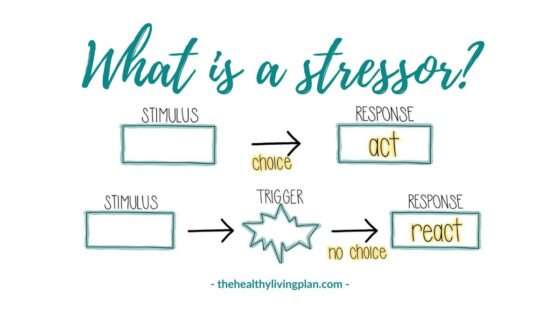
When we think about stressors, we often think about things happening around us: a difficult conversation, a demanding job, uncertainty, conflict or a situation that feels overwhelming.
But the actual stressor may not be something happening right now around us. It can take a different form.
Memories can continue to trigger stress reactions
Most of us know how a memory can affect us long after the original event is over. A memory of a special day can bring warmth or happiness. A memory of an accident can trigger tension and fear, even years later.
The same can happen with beliefs we hold about ourselves or the world, or with imagined scenarios about what might happen in the future. Memories, beliefs and fantasies, experienced as mental imagery, can trigger stress reactions in the present moment. We may experience this mental imagery through any of our five senses: we may see it, hear it, feel it, taste it or smell it.
In this sense, the stressor isn’t necessarily the situation happening around us in this moment. The mental imagery we carry with us can itself be the stressor.
This can help explain why we sometimes have a strong or familiar reaction to something happening now. What is happening in the present may be activating mental imagery connected to a past experience, a belief or something we imagine could happen.
And from a survival perspective, this capacity may have served us well. A parent’s voice yelling, “Don’t touch!” can help a child avoid danger. We may automatically put our foot on the brake when we see a red light. Or we may put extra effort into our work because we remember a strict teacher and learned that doing our best was important.
These responses can become part of how we navigate life. The question is whether they are still serving us in the same way today.
What if you could shift the stressor?
When we experience recurring stress reactions, we often focus on changing our external situation or managing the reaction. We may change our behaviour, avoid certain situations, develop coping strategies or simply learn to live with it. This is part of how we learn to cope with life.
But what if you could identify the mental imagery that is triggering the patterned stress reaction and shift it?
This is one of the possibilities offered by Logosynthesis®.
Logosynthesis provides a structured process for identifying memories, beliefs and fantasies represented as mental imagery that are triggering patterned stress reactions. The Basic Procedure guides you first to identify the stressor and then to shift the energy connected to it using three specific sentences.
Life happens. We cannot change events in the past, nor can we control everything that might happen in the future. However, we can explore and shift patterns in how we react to these events. When the mental imagery changes, people may also experience changes in their thoughts, emotions and physical reactions.
You don’t have to simply learn to live with it
Of course, some stressors are part of life. We will face demanding circumstances, difficult decisions, uncertainty and situations that require our attention and action. We can’t eliminate every source of stress, nor would we necessarily want to.
But we can take the time to pause and notice what is bothering us in our everyday lives. We all have situations that trigger stress reactions. That is a natural part of being human. From this position, we can use the Logosynthesis Basic Procedure to guide a process that can create meaningful shifts in our experience, one layer at a time.
For some stressors that have been with us for a long time, it takes practice with the Basic Procedure. Guidance from a trained professional is important to help allow the triggering mental imagery to surface and be identified. For many people, recognizing that a stress reaction is being triggered by mental imagery rather than solely the Current event can offer relief.
Logosynthesis can guide your process to eliminate stressors in the form of mental imagery, creating space for you to respond to what is happening now rather than continuing to react from what you carry with you.ace for you to respond to what is happening now rather than continuing to react from what you carry with you.
If you have questions or want to experience what can shift
Identifying and shifting mental imagery is a new experience for many people. If you are curious to explore what can shift, I invite you to use a guided video and book a complementary call or workshop with me, Cathy Caswell.